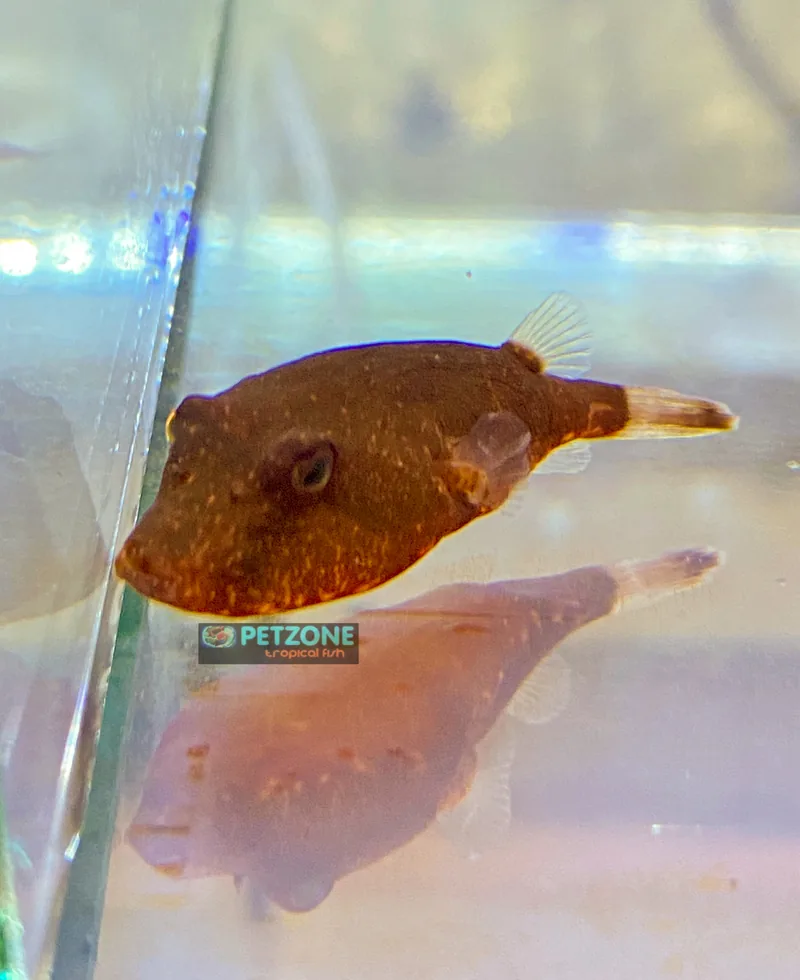
Is it normal for a potato puffer to stay buried?
Yes. Burying and long rests are normal ambush behavior for Tetraodon miurus. A resting fish should still breathe comfortably and maintain its usual appetite and body condition. Sudden changes, persistent refusal to eat, loss of balance or labored breathing need investigation.
The art of doing very little
A buried or motionless potato puffer may be behaving exactly as it should. Its eyes can remain alert above the sand while the rest of its body disappears. Give it a quiet retreat and resist digging it up to check on it. Instead, watch breathing, response to food and changes from its own baseline.
Separate resting from a warning sign
Judge stillness by the whole fish, not its location alone. A resting miurus may lie on or in the sand while breathing steadily, holding itself upright and responding when food or a familiar routine begins. Check from outside the aquarium before disturbing it. Labored or unusually rapid breathing, loss of balance, inability to hold position, injury, or a sudden change paired with food refusal is not explained by normal ambush behavior; test the water and use the health guide to decide how urgently to seek aquatic veterinary help.
Color has context
Orange, reddish, brown and mottled coloration occur within the species. Appearance can change with environment, lighting and stress. A color change alone is not a diagnosis and is not a reliable sex indicator. Pair it with other observations: appetite, breathing, skin, posture and water tests.
When glass surfing matters
Repeated pacing against the glass can reflect adjustment, reflections, insufficient cover or a problem with conditions. Check water values and temperature first, then consider lighting, cover and flow. Brief activity at feeding time is different from persistent agitation. Look for a pattern rather than diagnosing from a single moment.
Enrichment for an ambush fish
Offer different safe foods, vary feeding locations and maintain both sand and shelter. A predictable routine helps you notice when something changes. Alter small parts of the layout gradually; keep a familiar resting place. Enrichment should not require live vertebrate prey, mirrors, touching the fish or provoking inflation.
Personality without handling
A fish can associate you with feeding and still be a predator. Observe it through the glass. Never lift it for a photograph, poke it, tap on the tank or deliberately trigger puffing. If it must be moved, gently guide it into a rigid container underwater so it stays submerged and its fins are protected.
Common questions
Why does my potato puffer beg for food?
It may have learned to associate you with meals. Begging is not a reliable measure of hunger; use the planned schedule and body condition to decide on portions.
Why is my potato puffer lying still on the sand?
Tetraodon miurus is an ambush predator, so resting on or partly buried in sand can be normal. Look for steady breathing, an upright posture and its usual response to food or routine. Test the water and investigate promptly if the stillness is new or comes with labored breathing, loss of balance, injury or persistent food refusal.
Can I touch my potato puffer?
Observe through the glass. Handling can stress or injure the fish and its bite is powerful. Use a submerged rigid container when a transfer is necessary.
Why is my potato puffer changing color?
Lighting, background and stress can affect appearance. Check the change alongside breathing, appetite, skin and water tests; color alone does not identify the cause.
This guidance is for Tetraodon miurus. Care targets are starting points to use with observation and water testing. For symptoms or treatments, consult an aquatic veterinarian.
Explore our resources and photo credits