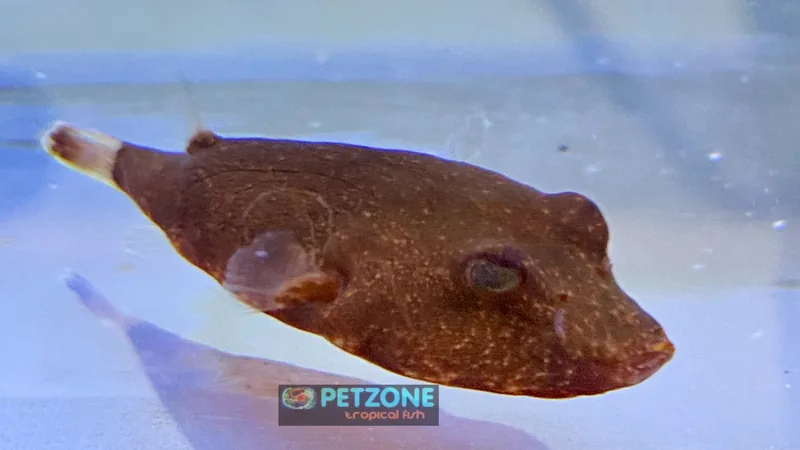
Is a potato puffer the same as a spotted Congo puffer?
No. The potato puffer is Tetraodon miurus, a squat sand-burying ambush predator. The spotted Congo puffer is Tetraodon schoutedeni, a different freshwater species with a spotted body. Ask for the scientific name: “Congo puffer” alone is not a precise identification.
| Feature | Potato / Congo puffer | Spotted Congo puffer |
|---|---|---|
| Scientific name | Tetraodon miurus | Tetraodon schoutedeni |
| Useful visual clues | Squat potato-like body, high-set eyes, upturned mouth | Spotted body; verify against the scientific name |
| Typical behavior | Sand burying and patient ambush | Generally more active; separate care guidance needed |
| Water type | Freshwater | Freshwater |
| This website’s care plan | Dedicated single-fish aquarium with soft sand | Not covered by the miurus care plan |
PetZoneSD: Tetraodon miurus · PetZoneSD: Tetraodon schoutedeni
The common-name trap
“Congo puffer” appears in listings for more than one species. An aquarium, food schedule or social arrangement recommended for one cannot be copied to the other. Names and photos should agree before you make a buying decision.
Look beyond color
A potato puffer can be orange, red-brown, dark or mottled. Color alone does not separate miurus from every other puffer or tell you its sex. Look at the body profile, eyes and mouth, then ask the supplier to confirm the scientific name.
Use a three-part identification check
First, get the scientific name in writing: Tetraodon miurus. Second, compare a current photo or video of the actual fish with the squat profile, high-set eyes and upturned mouth expected of miurus; do not rely on an edited listing image. Third, ask whether the fish spends time resting on or burying in sand. Appearance and behavior should support the name, but neither replaces a confirmed identification.
Get the supplier’s details
Ask how long the fish has been held, what food it accepts, and what water conditions it currently lives in. Request a current photo or video of the actual fish. A generic product image should not be used to judge that individual’s condition.
Follow the correct care path
For miurus, prioritize soft sand, a mature filter, oxygenation and its own aquarium. Do not use group-keeping claims about other puffers to plan miurus housing. If a listing or identification is uncertain, resolve it before buying.
Common questions
Are both Congo puffers freshwater?
Yes, these two species are freshwater. That shared trait does not make their behavior or housing interchangeable.
Which species is called the potato puffer?
Tetraodon miurus is the potato puffer. Tetraodon schoutedeni is commonly called the spotted Congo puffer.
Can a spotted Congo puffer guide be used for miurus?
No. Confirm the species and use the corresponding care guide, especially for housing, substrate and feeding.
Can I identify a Congo puffer by color or behavior alone?
No. Miurus color varies, and activity can change with stress, lighting and feeding. Use the scientific name plus a current photo or video; treat body shape and behavior as supporting clues rather than proof.
This guidance is for Tetraodon miurus. Care targets are starting points to use with observation and water testing. For symptoms or treatments, consult an aquatic veterinarian.
Explore our resources and photo credits