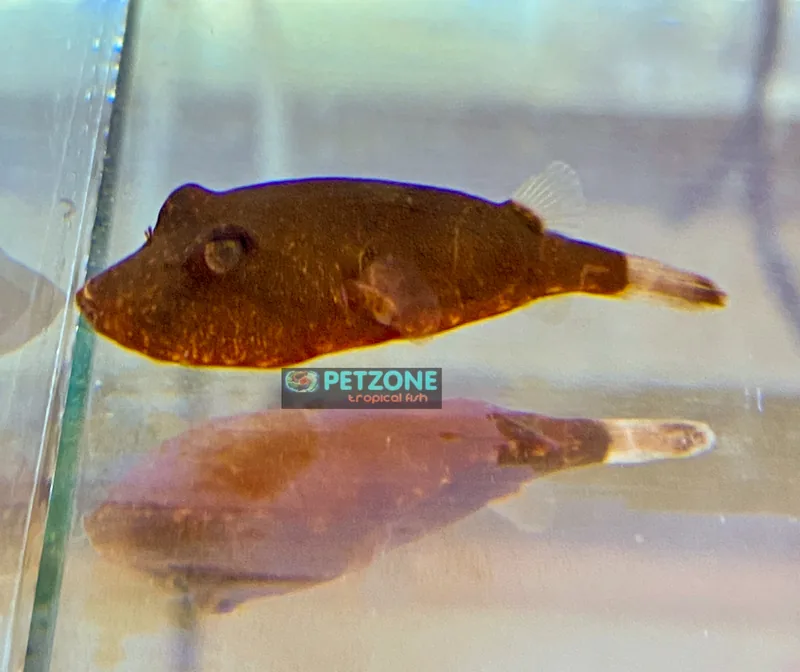
What water parameters does a Congo potato puffer need?
For Tetraodon miurus, this guide uses working targets of 26–28°C (79–82°F), pH 6.3–7.2 and GH 1–6 dGH, with zero ammonia, zero nitrite and nitrate below 15 ppm. It is a freshwater fish. Stable chemistry and strong oxygenation matter; make changes gradually and consider the fish’s existing conditions.
| Parameter | Target | Practical check |
|---|---|---|
| Temperature | 26–28°C / 79–82°F | Check daily with a separate thermometer |
| pH | 6.3–7.2 | Avoid sudden chemical adjustments |
| GH | 1–6 dGH | Test the source water and consider buffering |
| Ammonia | 0 ppm | Any detected reading needs attention |
| Nitrite | 0 ppm | Any detected reading needs attention |
| Nitrate | Below 15 ppm | Adjust maintenance to measured waste levels |
Working targets
Use these species-specific husbandry targets: temperature 26–28°C (79–82°F); pH 6.3–7.2; GH 1–6 dGH; ammonia 0 ppm; nitrite 0 ppm; nitrate below 15 ppm. Published care ranges differ; discuss your source water and the fish’s existing conditions with a specialist. Stability and good oxygenation matter alongside the numbers.
Make gas exchange visible
An air stone is optional when the filter already keeps the surface moving, but good gas exchange is not optional. Look for a continuous gentle ripple rather than a still surface, while preserving a calmer area where this ambush fish can rest without being buffeted. If circulation stops, the aquarium warms unexpectedly, or breathing becomes unusually fast or labored, inspect the equipment, increase aeration and test the water. A battery-powered air pump is useful outage backup; bubbles support gas exchange by moving water at the surface, but they do not replace biological filtration.
Freshwater means freshwater
Tetraodon miurus does not need a brackish aquarium. Do not add marine salt as a routine care practice. Advice for figure-eight or green spotted puffers does not apply here. Any therapeutic salt use should be a specific treatment decision made with a qualified fish-health professional.
Test with a purpose
Test ammonia, nitrite and nitrate during cycling, daily after stocking until stable, and whenever behavior changes. In an established aquarium, test at least weekly and keep a log. Check temperature daily. Follow your test kit’s timing and shaking instructions; mishandled nitrate reagents can give misleading results.
A repeatable weekly routine
Begin with a 30–50% weekly water change as a practical starting point, then adjust volume and frequency to your measured nitrate and waste load. Dechlorinate replacement water and closely match temperature and chemistry. Siphon uneaten food and surface waste from the sand. Locate the buried fish before putting a siphon or tool into the substrate.
Protect the biological filter
Rinse clogged filter sponges gently in removed aquarium water or dechlorinated water. Do not sterilize the filter, let its media dry out, or replace all media at once. Removing beneficial bacteria can restart the cycle. Keep flow and aeration running; after a prolonged outage, test immediately and watch breathing closely.
Avoid chasing pH
Do not use rapid pH-up or pH-down adjustments to hit a single exact number. Soft water can lose buffering and become unstable. Test KH as well as GH and pH; get experienced help if your water is very hard or has very low buffering. Pure, unremineralized reverse-osmosis water is not a ready-to-use aquarium supply.
If ammonia or nitrite appears
Treat any detectable reading seriously. Check the result, promptly change water with matched, dechlorinated water, increase aeration and remove decaying food. Recheck and repeat as needed. Investigate filter failure, overfeeding, new stocking or chlorinated water exposure. Contact an aquatic veterinarian urgently if the fish is distressed; do not add random medications.
Common questions
Does a potato puffer need an air stone?
Not necessarily. If the filter provides continuous surface movement and the aquarium is well oxygenated, a separate air stone may be optional. Use one when more aeration is needed and keep a battery-powered air pump available for outages; avoid creating flow that constantly buffets the fish’s resting area.
Should I add aquarium salt to a potato puffer tank?
Do not add salt as routine species care. Miurus is freshwater. Therapeutic use is a separate decision for a qualified fish-health professional.
Can a potato puffer live in tap water?
That depends on your tap water. Test GH, KH and pH, dechlorinate correctly, and compare with the fish’s existing water. Hard or unstable water needs a considered plan rather than rapid chemical adjustments.
Is nitrate below 15 ppm the same as a cycled aquarium?
No. Cycling is about biological processing of ammonia and nitrite. Low nitrate alone can result from water changes, plants or a misleading test and does not prove a filter is mature.
This guidance is for Tetraodon miurus. Care targets are starting points to use with observation and water testing. For symptoms or treatments, consult an aquatic veterinarian.
Explore our resources and photo credits