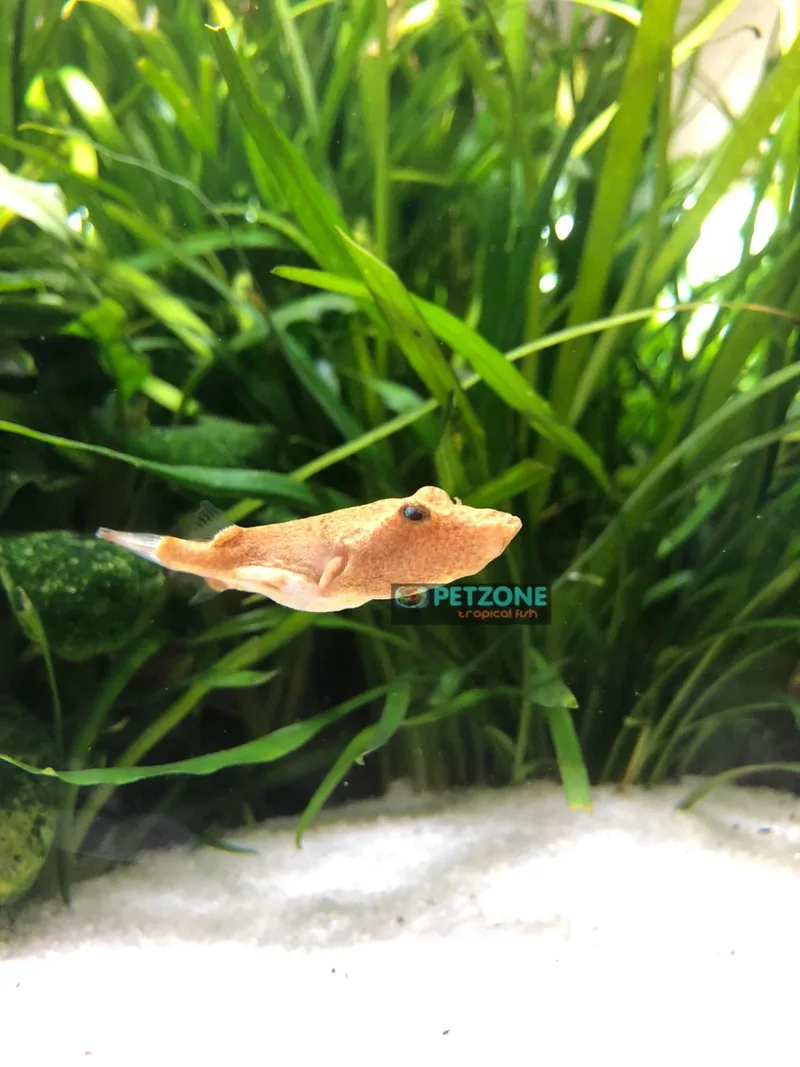
What substrate is best for a potato puffer?
Use fine, smooth, inert aquarium sand that lets Tetraodon miurus bury without scraping its skin. Avoid gravel, sharp grains and exposed plant soil. Provide open burying space and deeper preferred spots as needed for the fish’s body depth. Secure heavy hardscape on the tank base before adding sand.
Choose by texture and aquarium suitability
The important qualities are smooth grains, cleanliness and suitability for the intended water chemistry. Aquarium labeling alone does not prove a grain is soft enough. Avoid treated, scented, contaminated or unknown building materials. Rinse according to the product’s instructions before use.
Why gravel is a poor substitute
Even rounded gravel cannot offer the same enveloping bed for a fish that buries headfirst. Coarse or sharp material can abrade skin. Decorative river pebbles may be used as stable hardscape outside the main burying zone, but they should not replace the soft sand bed.
Depth follows the fish
About 2–5 cm in general areas is a planning starting point, with deeper wallowing spots where the fish needs them. A fish should be able to bury without being forced against the tank base. Adjust the bed as it grows, and plan maintenance access around deeper areas.
Place rocks before the sand
A digging fish can undermine rock resting on a sand mound. Set heavy pieces securely on the aquarium base and make sure they cannot tip or trap the fish. Use smooth surfaces and leave several open routes between shelter and the sandy foreground.
Clean without chasing the puffer
Locate the fish first. Siphon visible waste just above the surface and maintain deeper sections gradually. Never plunge a siphon blindly into a likely hiding spot, undermine a rock or aggressively stir the whole bed around the fish. Remove uneaten meat promptly.
Keep plants out of the digging path
Java fern and Anubias attached to wood or rock can tolerate a layout with open sand. Leave planting soil out of exposed burying areas. Plants can support the habitat, but they do not replace filtration, water changes or enough open floor space.
Common questions
Can a potato puffer live on bare glass?
A bare bottom does not provide the normal burying habitat described in this guide. Plan a soft sand bed for permanent housing; clinical treatment setups are separate veterinary decisions.
Is darker sand better than white sand?
Texture, cleanliness and water suitability matter more than color. Color can influence appearance and contrast but does not establish a safer substrate.
Does the sand need to be deep everywhere?
No. Offer usable burying zones without making maintenance unnecessarily difficult. Adjust preferred spots to the fish’s body depth.
This guidance is for Tetraodon miurus. Care targets are starting points to use with observation and water testing. For symptoms or treatments, consult an aquatic veterinarian.
Explore our resources and photo credits